What's The Current Job Market For Built In Microwave Oven Combo Professionals?
integrated microwave in Microwave Oven Combo Offers Convenience and Versatility A built in microwave oven combo provides the best of both worlds by making your microwave and wall oven into one appliance. They can free space on your counters and give your kitchen a sleek aesthetic. These models feature powerful broilers that cook evenly and their microwaves heat food quickly. These models offer a range of cooking options for different food items. Size Combining the convenience of a microwave oven and the flexibility of wall ovens with a built-in microwave and wall oven combination is a great solution for kitchens with a variety of styles. Explore our complete range of microwaves that combine with wall ovens to find the best option for your home. Make sure you check the cutout specifications for your selected model and the installation guide to be sure it is suitable for your space. Our microwave & wall oven combinations feature both microwave and wall oven models that come in a variety of styles, colors and finishes that will complement any style. Look for features such as simple and easy controls and a power cook function and a built-in self-cleaning system to cut down on time. Convenience A built in microwave oven combo can save space on your kitchen counters and provide a modern design to your space. Because it acts as a microwave and traditional oven, you can heat up leftovers, frozen meals and pre-packaged meals in one appliance. It can also eliminate the need for an additional countertop appliance or a bulky stand-alone wall oven. A combination microwave oven can also be a good option if you want to upgrade your kitchen without having to undergo any major renovations. Microwave ovens are available in a variety of different styles to fit your kitchen decor. Some microwave oven combos have doors that swing out right to left, while others are drop-down models that open the same way as traditional ovens. There is also microwave ovens with the drawer design that opens as cabinets. Microwave drawers can be easily accessible and are perfect for small space. Combination microwaves can also provide a range of features to assist in making meal preparation easier and more convenient. For instance, certain models come with a sensor steam cycle that automatically adjusts the time and temperature of your food items to ensure that you receive perfect steamed fish and vegetables. Other features include a broil element that lets you quickly melt cheese or brown your favorite dish, as well as Crispwave™ technology that can grill food items, bake and crisp them. Think about how often you'll use each feature when choosing the microwave oven combination. If you'll use the oven more frequently than the micro, you might prefer an extra wall oven. A combo oven has a smaller capacity than a standalone oven. Once you've selected the best microwave and oven combination for your needs, it's time to think about the installation. Over-the-range models are positioned over your stovetop or cooktop and connected to a power outlet. Built-in microwaves can be incorporated into cabinets or walls in your kitchen. Some models even have trim kits that let you seamlessly match your new microwave with your kitchen cabinets. Energy Efficiency Built-in microwave ovens are a great choice for those who have smaller kitchens in their house or apartment. They can free up the space in cabinets which would otherwise be taken by separate appliances, and can also help reduce energy consumption. They are more energy efficient than traditional wall ovens and offer the most efficient method to cook. They can also be used to cook food or warm food items. This reduces the requirement for other appliances, such as toasters or warming plates. DOE performs several analyses when evaluating potential amendments to energy conservation standards. These include market and technology assessments screening analysis, engineering analyses and national impact analysis (NIA). In this SNOPR DOE will draw on its engineering analysis of microwave ovens to determine the level of efficiency improvements are possible for this product category. 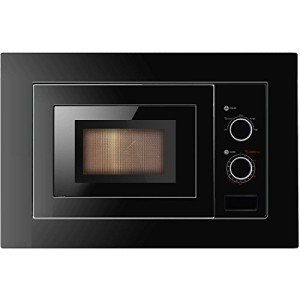 DOE will assess the design of a microwave with a set energy performance objectives in the engineering analysis. The engineering analysis will then determine the maximum improvement in energy efficiency that is technologically feasible based on the most advanced microprocessor-controlled model available on the market or in working prototypes, or the maximum reduction in energy consumption that is technically achievable with the current technologies available for this product class. As part of the NIA, DOE will evaluate the impacts on consumers for each product class including lifecycle cost savings, and simple payback periods (“PBP”). DOE will use the Government Regulatory Impact Model, with an adaptation for ovens that can be microwaved to calculate the industry net present value (NPV). DOE will also assess the impact on manufacturers and will employ a modified industry cash flow model that is adapted to this product type in order to estimate manufacturing NPV. Additionally, DOE will consider the potential impact on small business manufacturers as well as other subgroups of manufacturers to determine if they could be disproportionately affected by these proposals. DOE will also examine whether the test procedure for microwave ovens requires to be revised to include active mode power consumption as well as a possible integrated energy use measure. Currently, the test protocols only address standby mode power use. Design Wall ovens are based on evenly circulating hot air while microwaves make use of waves to cause the water molecules in food to vibrate and produce heat. Combination wall units combine these two appliances into a single unit, saving space in the kitchen and giving a modern, sleek look. You should carefully think about your budget and needs before purchasing a combination wall oven. Some of the combination ovens we evaluated have performance or design issues.